Nuclear Infrastructure,
from Origination to Commissioning
We support ALL phases of successful deployment on a nuclear site
Reactor design is not what’s holding nuclear back.
America has built nuclear power plants on time and on budget before, but in the past decade, the country only completed two.
The gap is in deployment: the ability to plan, build, and commission large nuclear assets to schedule and on budget, repeatedly.
Source: U.S. Energy Information Administration, “Plant Vogtle Unit 4 begins commercial operation,” Today in Energy, May 1, 2024. https://www.eia.gov/todayinenergy/detail.php?id=61963

The Nuclear Company closes that gap.
Design once. Build many.
We leverage standardized designs from existing reactor technology providers, develop repeatable delivery processes, and carry what we learn on every project into the next.
Our Model
Our “best athlete” model carries a nuclear plant from origination through decades of operation. We structure each project’s ownership, risks allocation, and division of responsibility to optimize for stakeholder strengths and align incentives.

We own and operate
We originate, develop, finance, build, own, and operate the plant. (A build–own–operate structure.)
In every partnership structure,
the plant gets the same deployment discipline
and the same long-term service.

We deliver as a service
We deliver the project for you, from origination through startup, and service it afterward. (A deploy-service structure)
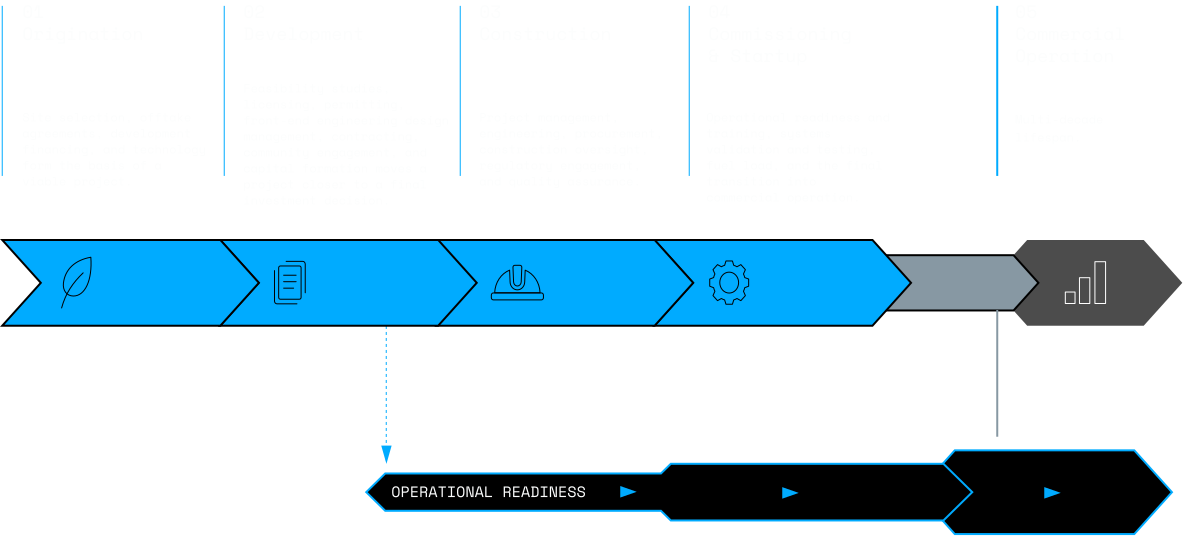
We bring together every capability a nuclear project requires.

Site, Customer & Community
Screening parcels for favorable attributes and red flags, securing land control, conducting detailed studies and analyses to verify land suitability for nuclear projects.

Community engagement
Earning the right to build, with local trust and endorsement.

Licensing & permitting
Ensuring the project scope is approved by the necessary authorities and meets the highest levels of safety and environmental protection.

Offtake
Brokering long term power purchase agreements that guarantee return on project investment.

Financing
Coordinating the debt and equity capital needed to develop and deliver the project with maximum efficiency and the most appropriate risk-sharing structure.

Engineering & technology
Engineering management that selects a complete design early and adheres to it, with strict robust change controls and interfaces between design and construction partners.

Supply Chain & Procurement
Standardized packages and a pipeline of projects that build supplier relationships on confidence and sustained orders.

Construction, Commissioning & Startup
Coordinate the delivery of heavy construction, testing, fuel load, and the transition to commercial operation.

Operational Readiness
Hiring, training, and qualifying the operations team long before fuel load, with security and emergency preparedness built in from the start.
Programmatic approach
to projects.
The strongest nuclear build-outs in history were not collections of individual projects. They were systems of execution: standardized, continuous, and staffed by experienced teams who executed again and again.
The American Fleet, 1970s–80s
A combination of designs and continuous construction, with a supply chain that could count on the next order.
France, Korea, China
Programmatic deployment and workforce continuity, sustained across decades and repeatedly outperforming one-off megaprojects.
Megaproject Discipline Beyond Nuclear
LNG and heavy industrial programs, where repetition, modularity, and rigorous front-end loading are the difference between a program and an overrun.
Sources:
¹ Lovering, J., Yip, A., and Nordhaus, T., “Historical construction costs of global nuclear power reactors,” Energy Policy 91 (2016). https://doi.org/10.1016/j.enpol.2016.01.011
² MIT Energy Initiative, The Future of Nuclear Energy in a Carbon-Constrained World (2018). http://energy.mit.edu/research/future-nuclear-energy-carbon-constrained-world
³ Merrow, E. W., Industrial Megaprojects: Concepts, Strategies, and Practices for Success (Wiley, 2011).
⁴ U.S. Department of Energy, Pathways to Commercial Liftoff: Advanced Nuclear, 2024 Update. https://www.energy.gov/sites/default/files/2025-07/LIFTOFF_DOE_Advanced-Nuclear-Update.pdf
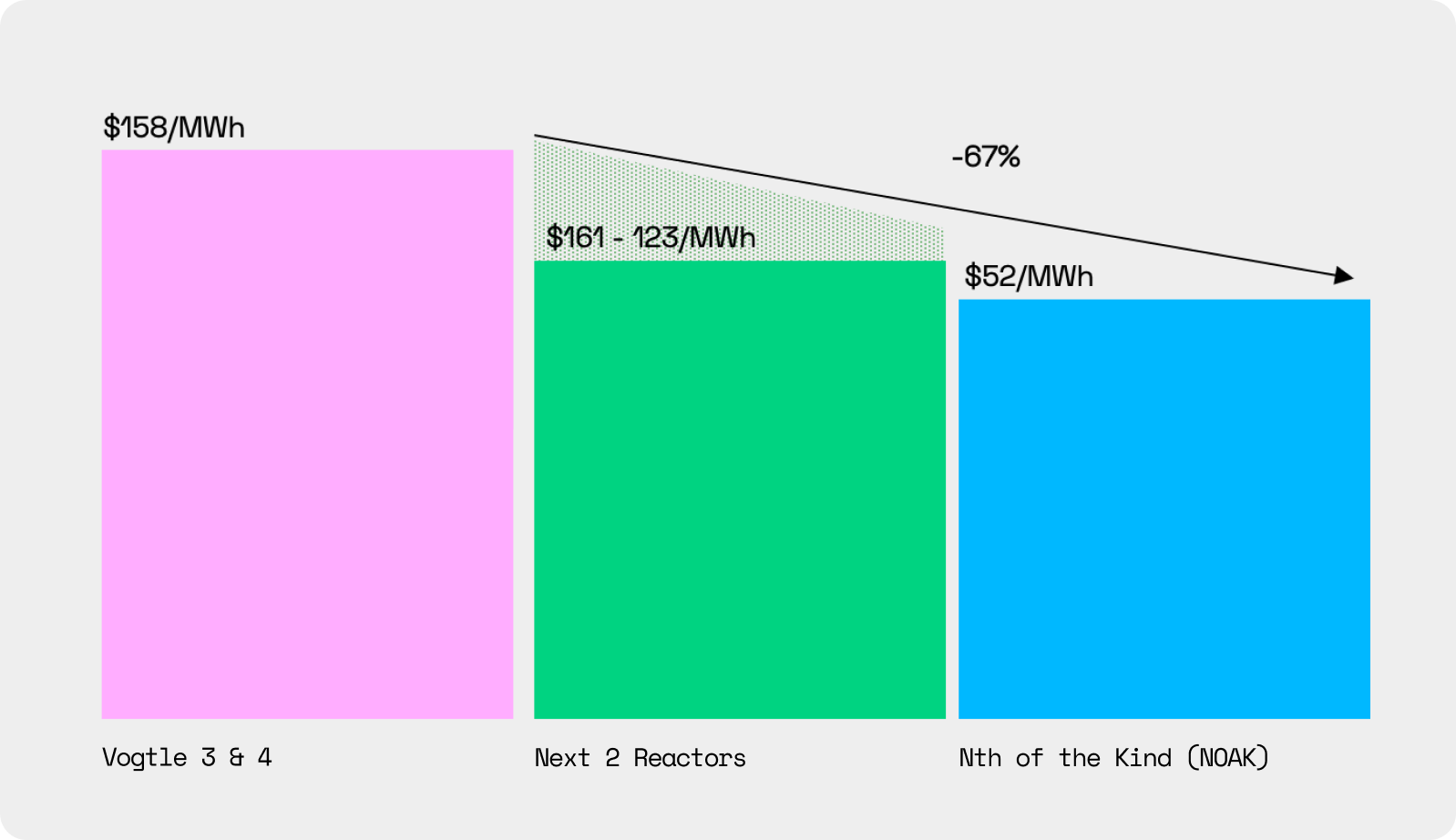
Levelized Cost
Of Energy
Gigawatt Fleet Deployment
Sources:
Shirvan, K., 2024. Total cost projection of next AP1000. Massachusetts Institute of Technology, 2024. Third-party estimate; not a projection of TNC performance.
An Issue of
National Security
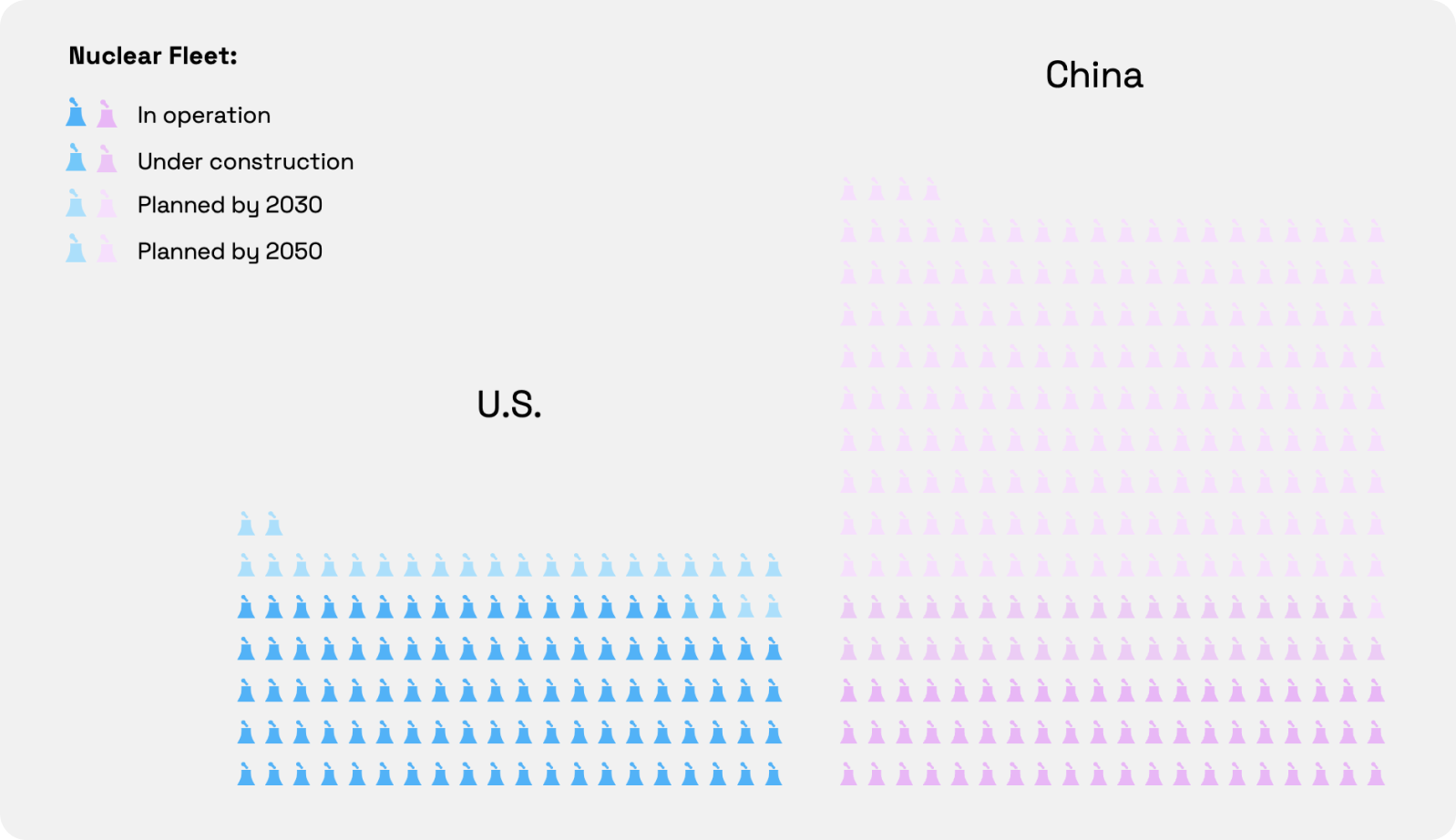
China is estimated to reach 200 gigawatts, double that of the United States’ current nuclear capacity, within 15 years.
Enabled by NOS.
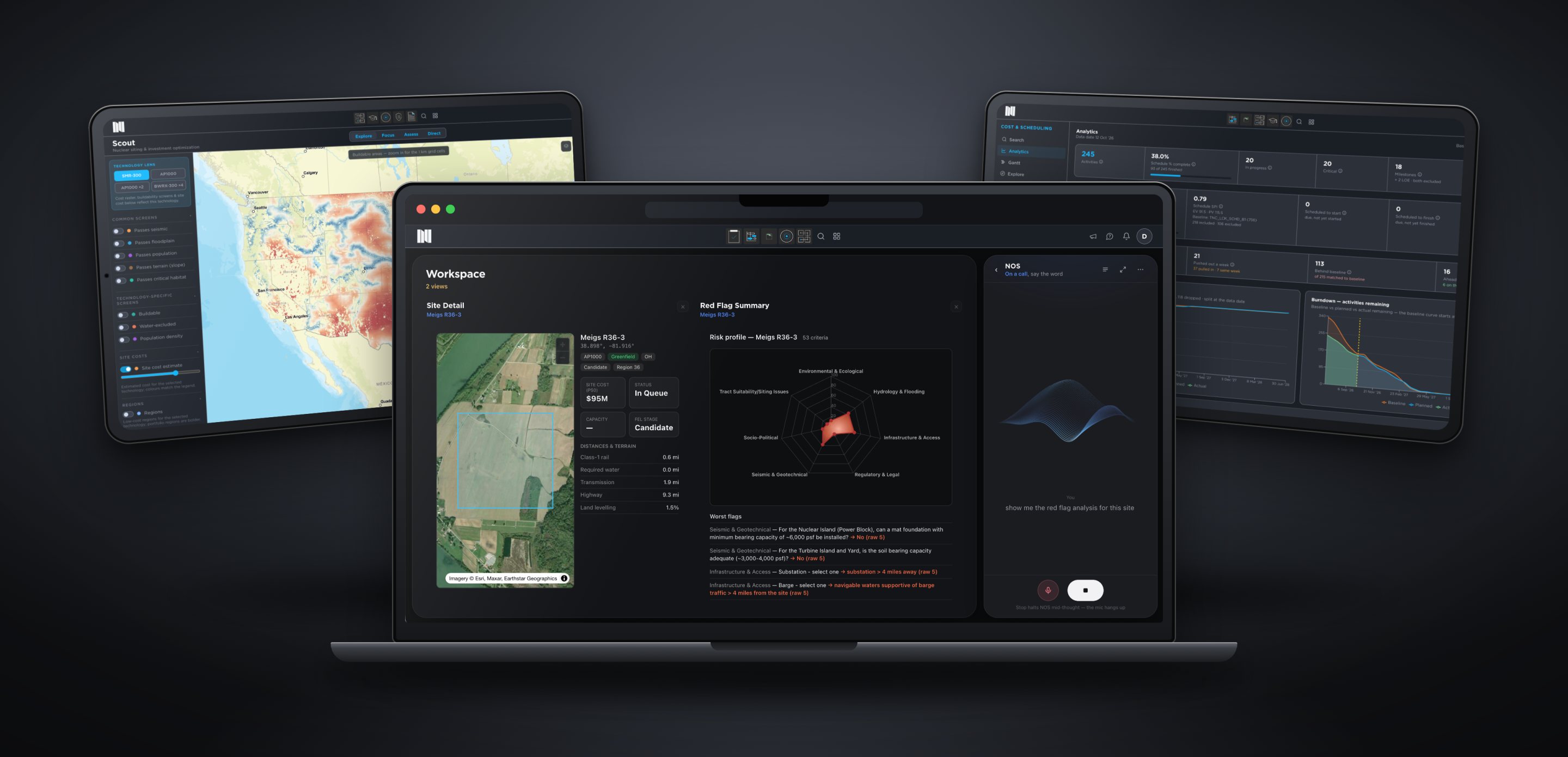
Every project runs on our Nuclear Operating System: one operating model, one data backbone, one institutional memory.
Explore the full suite of The Nuclear Company’s capabilities.